Quick answer
January to April is the best time to visit Cebu — dry season, calm seas, and full tour availability with no typhoon risk. November and early December are the best value months with good (improving) weather and lower prices. August and September are the only months we'd actively advise against if you have a choice — peak typhoon risk and the roughest seas of the year.
We run private tours in Cebu every week of the year. The answer to "when should I go?" depends on what you're doing, what you're willing to trade off, and how flexible your itinerary can be. This guide is built on what we actually see on the ground each month — not generic climate data.
Month-by-month guide: Cebu weather and conditions
January ⭐ — Dry season peak, Sinulog Festival
January is Cebu at its most spectacular. Seas are calm, visibility is 15–20 m for snorkeling and diving, temperatures are a comfortable 26°C, and every tour operates without weather disruption. The one complication is crowd management: the third Sunday of January is the Sinulog Grand Parade — 2–3 million people in Cebu City, road closures, and hotels sold out months in advance.
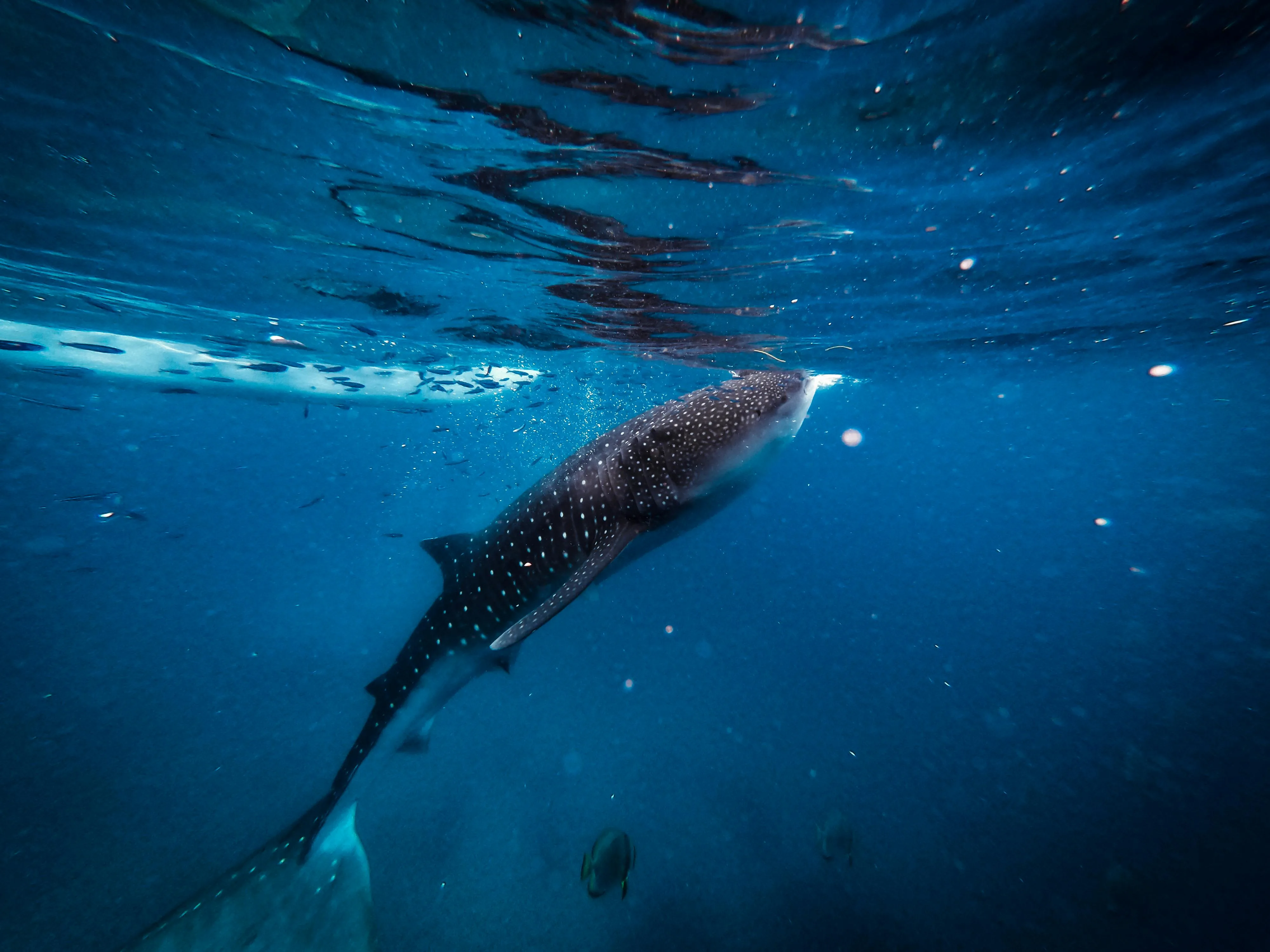
For tours, January has the longest whale shark queues of the year. At Oslob, if you arrive with a group tour at 8 AM, you may wait 90 minutes before entering the water. Our 3:00 AM pickup from Cebu City puts guests in the registration line by 5:30 AM — typically first or second in queue before the crowds arrive. This is the single biggest operational advantage of a private tour in peak season.
Crowd level: Very high (Sinulog week especially) · Price level: High · Tour conditions: Excellent
Best for: Everything — whale sharks, Kawasan canyoneering, Kalanggaman Island, Bohol, island hopping, Sinulog Festival.
February ⭐ — Driest month, Valentine's peak
February is statistically the driest month in Cebu (around 50 mm rainfall, 7 rain days). Temperatures are the lowest of the year at 26°C — still warm, but comfortable for all-day outdoor activities. Sea conditions are excellent.
Valentine's weekend drives a domestic tourism spike — couples from Manila and the Philippines book Cebu resorts and island-hopping packages. This briefly raises prices and crowds. Outside of Valentine's week, February is among the easiest months to travel: predictable weather, reasonable availability, and no major festival crowds.
Crowd level: High (Valentine's week) / Moderate otherwise · Price level: High · Tour conditions: Excellent
Best for: All tours. Snorkeling and diving visibility is superb. Kalanggaman sandbar is at or near maximum width.
March–April ⭐ — Sweet spot: hot, dry, excellent
If you can only visit Cebu once, March or April is the optimal choice. Sea temperatures reach 27–28°C, visibility is 15–20 m, and the sandbars at Kalanggaman and Sumilon are at their widest. International tourists (from Europe, Korea, Japan, Australia) are most numerous in March–April — Cebu feels genuinely busy but not overwhelming.
Holy Week (Semana Santa, March/April depending on the year) is the biggest domestic travel period in the Philippines. Cebu hotels fill up from Holy Wednesday to Easter Sunday. Whale shark queues peak during Holy Week. If your dates fall during Semana Santa, book everything — hotel, tours, transport — at least 6–8 weeks in advance.
April is the hottest month (30°C), which some visitors find intense. The heat is manageable in the water and early morning, but afternoon city touring can be uncomfortable.
Crowd level: High (Holy Week) / Moderate otherwise · Price level: High · Tour conditions: Excellent
Best for: All tours. Best water clarity of the year for snorkeling and diving. Widest sandbars at Kalanggaman and Sumilon.
May ✓ — Transition month, still very good
May is peak season conditions with the first signs of change. Temperatures stay at 30°C, seas remain calm, and all tours run without disruption. By mid-May, afternoon showers start appearing — usually short, warm, and followed by sunshine. These don't typically affect morning tours.
Philippine schools release in early April and families travel heavily through May. By late May, domestic tourism drops and international visitors thin out. The last two weeks of May offer a window of good conditions with noticeably fewer crowds — especially at whale sharks (shorter queue) and Kalanggaman (quieter beach).
Crowd level: Moderate to Low by late May · Price level: Moderate · Tour conditions: Very good
Best for: All tours. A good month for travelers who want peak-season quality without peak-season crowds in the back half.
June ✓ — Shoulder season, value and quiet
June is when Cebu becomes a different kind of travel experience. Sporadic afternoon rain arrives but mornings are typically clear and calm. Whale shark queues drop significantly — we often have guests in the water by 6:30 AM with no wait at all. Kalanggaman and Sumilon remain accessible with calmer sea conditions on most days.
Tour prices don't drop dramatically in June, but hotel rates start falling (15–25% below peak). The biggest advantage is crowd absence: beaches that are packed in January are quiet in June. For travellers who prefer exploring without elbowing through groups, June is quietly excellent.
Crowd level: Low · Price level: Moderate · Tour conditions: Good, with afternoon rain likely
Best for: Whale sharks (shortest queues of the year), Kawasan canyoneering (operates in light rain), city and cultural tours, budget-conscious travellers who want good conditions.
July–October ⚠ — Typhoon season
July to October is the official typhoon season for the central Philippines. The honest assessment: Cebu is significantly less affected than Luzon (Manila, Bicol) and Eastern Visayas (Leyte, Samar), but the risk is real and cannot be ignored. August and September are the peak risk months.
What typhoon season actually means on the ground in Cebu:
- Oslob whale sharks — still operate most days. The cove at Oslob is sheltered. We run this tour in July–September unless there is an active typhoon signal.
- Kawasan canyoneering — operates in most weather except typhoon warnings or very heavy upstream rain (which raises river levels). The canyon closes on the 3rd Wednesday monthly for clean-up regardless of season.
- Kalanggaman Island — the 45-minute open-water bangka crossing is weather-dependent. This is the tour most likely to be cancelled in rough conditions. July–September, we advise guests to have a backup plan.
- Mactan island hopping — generally fine in moderate rain; the hopping islands are closer to shore. Cancellations happen in sustained rough weather.
- Bohol day tour — land-based sights (Chocolate Hills, tarsiers, Loboc River) are unaffected by rain. The Cebu–Bohol ferry is the only weather-sensitive element.
If you travel in typhoon season: choose a private operator who can reschedule on the day without penalty rather than a marketplace booking where you may forfeit your payment. Check PAGASA (the Philippine weather service) 48 hours before any boat tour.
Crowd level: Very Low · Price level: Low (20–40% below peak) · Tour conditions: Variable — depends on weather that week
Best for: Budget travellers with flexibility, whale sharks (shortest queues), Kawasan canyoneering, land-based tours. Not ideal for Kalanggaman or multi-island hopping.
November ✓ — Hidden gem month
November is our honest favourite recommendation for budget-conscious travellers who want good conditions. By mid-November, rainfall eases, typhoons become rare, and sea conditions improve quickly. The atmosphere in Cebu is festive — preparations for Sinulog (January) and Christmas create a local energy that's enjoyable to be around.
Hotel prices are still 15–25% below December rates, crowds are minimal, and all tours run normally from about November 15 onwards. The first two weeks of November carry slightly more weather risk — if you're arriving November 1–14, have one land-based tour as a backup.
Crowd level: Low · Price level: Low to Moderate · Tour conditions: Good (improving through the month)
Best for: Budget travellers, travellers who want beach conditions without peak prices, couples avoiding the Valentine's/Christmas rush.
December ⭐ — Peak season, festive atmosphere
December is outstanding for weather — dry, clear, 27°C — and demanding in every other logistical sense. Hotels within walking distance of Cebu City and Mactan resorts fill weeks in advance. Tour availability shrinks. Prices are at their highest. Christmas Eve and Christmas Day (Dec 24–25) bring domestic tourism at levels comparable to Sinulog.
The payoff is genuine: Cebu in December has a festive atmosphere that's difficult to replicate. The weather is perfect, the markets are lively, and most tour conditions are ideal. If you're visiting in December, book hotel and tours at minimum 6 weeks in advance, and 10–12 weeks if you want Sinulog week (January immediately follows).
Crowd level: Very High · Price level: High · Tour conditions: Excellent
Best for: All tours, especially Kalanggaman, Sumilon, and island hopping. The festive atmosphere is worth the planning effort.